You are here: Do you need a quantity surveyor for your project?
How a professional QS can prevent costs spiralling out of control
When embarking on a home extension or new build, managing your budget and getting the best value for your money can be a daunting task. This is where a quantity surveyor (QS) comes in. Often associated with large commercial projects, a QS can also play a pivotal role in domestic schemes. But what exactly do they do and how can they help your project?
With special thanks to Chartered Quantity Surveyor John Durrant, MRICS, partner at KSP Consultancy LLP for his insights.
What is a Quantity Surveyor (QS)
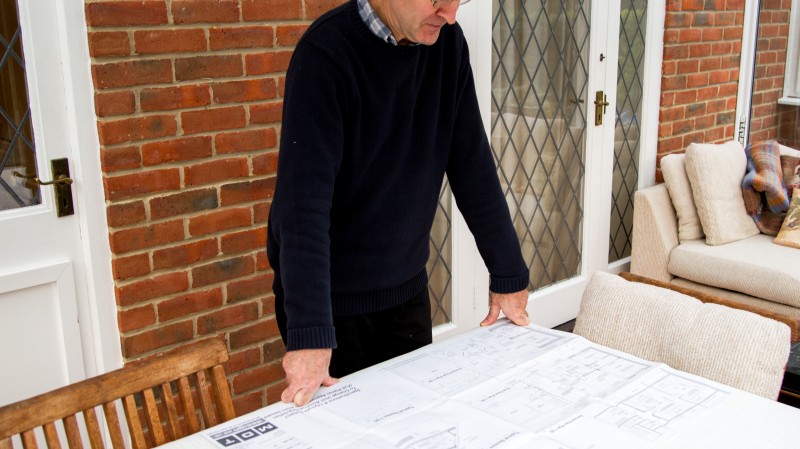
A quantity surveyor is a construction professional with expertise in managing all costs relating to building projects. While architects and builders focus on the design and construction, the QS takes care of the financial and contractual aspects of the project. “They quantify the building and help everyone to understand the budget and costs involved, ensuring value for money. A QS is very useful indeed,” says Scot Masker, founder of Masker Architects.
Typically, part of the consultant team on larger home extensions or bespoke new builds, a QS is an expert in construction costs. According to Scot, “A QS is useful for every project but there is a cost involved. For small home extensions, it might be hard to justify but for larger projects they are very useful to make sure the client isn’t charged too much and that all the contractors are on the same page.”
Quantity surveying is a specialist area. John Durrant, a Chartered Quantity Surveyor and partner at KSP Consultancy LLP, explains not all Chartered Surveyors handle cost estimates, tender preparations or contractor negotiations – services typically provided by a RICS Chartered Quantity Surveyor. On smaller projects, some Chartered Building Surveyors may offer these services, but a QS offers more comprehensive expertise on building costs.
Typical QS Services
A QS can support your project from its earliest concept stages through to completion on site. John emphasises the importance of involving a QS early. “Once the architect has understood the client’s brief and developed initial sketch designs, a QS can provide early cost advice before a more detailed design is progressed.” Before submitting planning drawings for approval, it’s wise to have a QS prepare a detailed budget estimate/cost plan. “This ensures the client is fully aware of the likely construction costs and can choose to have planning drawings tweaked,” explains John.
Here are some of the key services a QS can offer:
- Initial project costing: A QS provides early cost advice based on initial sketches, offering more detailed budget estimates once drawings (plans, elevations, sections) and specifications are available, ensuring a scheme is costed as it evolves. The construction industry has price books and tables for categories of building work based on actual costs. For quick estimates, these tables can provide an idea of price per m2 for a building type. Computer models offer basic estimates from your architecture plans, but a QS will factor in site-specific information and client requirements to offer far greater accuracy. Plus, they have knowledge and experience of current building costs.
- Preparing tender documents: Once planning and building regulations approvals have been secured, the QS measures the architect and structural engineer’s drawings to produce a detailed Bill of Quantities or a Quantified Schedule of Works. These pricing documents ensure potential contractors bid on the same quantities, making it easier to compare quotes and ensure fair pricing. It also saves each contractor from having to make their own measurements from architecture plans – filling in any gaps with their own assumptions.
- Hiring small contractors: A QS can liaise with the architect to compile a suitable list of trusted local contractors. “Quantity surveyors should have a good knowledge of experienced and reliable contractors of all sizes in their local area and in some cases further afield,” notes John. If you are managing the build yourself, a QS can provide a robust summary of the planned work, help draft clear terms of appointment, payment schedules and deadlines, which benefits both you and the contractor as it provides clarity and structure.
- Evaluating Tenders: Once bids are received, the QS can analyse them and advise on the most suitable, ensuring you are getting value for money.
- Measurement & Valuations: Most projects involve staged payments. If you hire a QS, payments can be made based on measured delivery, ensuring progress on site. The QS should be adept at providing interim valuations. This might include measured surveys for completed work – such as laying foundations, tiling the roof or installing windows.
- Contract Administration: While architects often oversee contract management on buildings they design, a QS can also step into this role if required, managing the relationship between client and contractors to ensure everything stays on track, addressing any financial or contractual issues that may arise.
- Dispute Resolution: If problems arise, a QS can mediate between the you and contractor, bringing expert third party knowledge to resolve any disputes, for example over time, quality or cost. While not all QSs handle dispute resolution, some bring valuable negotiating skills.
When does a project justify a QS?
For smaller and medium-sized projects (up to £250,000), homeowners may only need to employ a QS for initial cost estimates, tender advice and contract drafting. Beyond that, some clients might feel comfortable proceeding without further QS involvement, although ad hoc advice is always an option. For projects worth more than £250,000, John strongly recommends appointing a QS to provide a full range of services, especially for homeowners who lack construction experience. This might include monthly site visits, agreeing appropriate interim payments, managing variations and final cost agreements.
It’s important to note that producing a full Bill of Quantities, which describes and quantifies all the construction work in detail and to a standardised method of measurement, is the most expensive pricing document to produce. However, it can make contractor bids easier to compare and simplifies monthly valuations and agreeing of variations/cost adjustments. Alternatively, a less detailed Quantified Schedule of Works can be produced in less time and for a lower cost.
How much does hiring a QS cost?
The fees for hiring a QS will vary depending on the size of your project and the services required. “For a full pre- and post-contract service, not including contract administration, a QS’s fee may range from 1.5% of the construction cost on a high value project to 2.5-3% of construction on a smaller project, but the fee will be specific to a particular build.,” says John. Alternatively, the QS may offer fixed fees for pre-contract stage and monthly rates for post-contract services.
While a QS might not be necessary for every project, they can bring significant value to larger home extensions, renovations and new builds. Their expertise ensures that both clients and contractors understand the budget from the outset, helping to prevent costs spiralling out of control and ensuring value for money.
If you are looking to make some home improvements, you may find some of these services useful

Building Regulations
Find details of local experts who can help with Building Regulations

Builders
Find local help with a building project

Architectural Design Services
Find local Architectural Design experts

Structural Inspections
Find an expert to carry out a structural inspection

Building Surveys
I want a local surveyor to do a Building Survey for me

Choose which Architectural service you require
If you are not sure which service you require, check out the options available...