You are here: What do proposals to relax wildlife protection rules mean for homeowners – and bats?
Do you still need a bat survey for your loft or barn conversion?
Developers may soon face fewer planning obstacles as the government pushes to fast-track new housing. Recently, Chancellor Rachel Reeves called on housebuilders to “stop worrying about the bats and the newts.” “The trade-offs have gone too far,” she told the BBC’s Justin Webb. “We can’t always protect every bat and every newt.” But what do proposals to relax rules on wildlife protection mean if you’re planning a loft conversion, barn renovation or roof work?
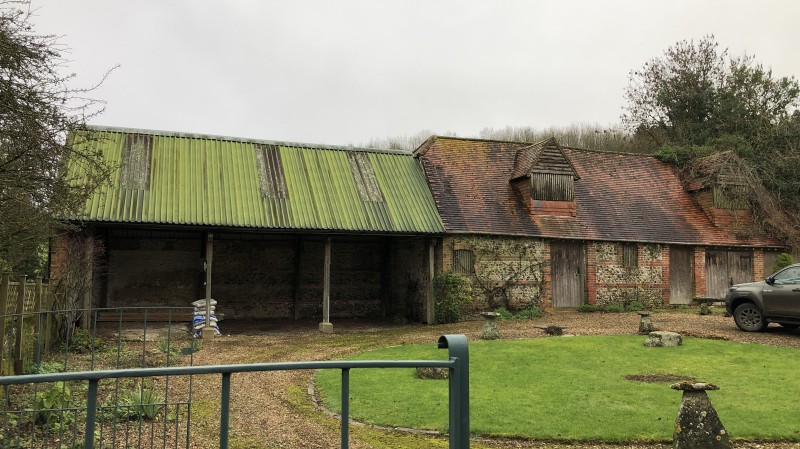
Photo supplied by Daniel Ahern Ecology
Will you still need a bat survey?
Bats became a hot topic after Prime Minister Keir Starmer stated that a £200m bat tunnel had held up the HS2 rail line through Buckinghamshire. Now under what the government calls a “radical shake-up” of red tape some of the guidance on protecting bats is being reconsidered. Natural England, the regulator, is expected to drop its requirement for planning officials at local authorities to refer to bat survey guidelines produced by the Bat Conservation Trust (BCT). “It should not be the case that to convert a garage or outbuilding you need to wade through hundreds of pages of guidance on bats,” the Treasury said in a statement.
What do conservation experts say?
The proposed changes have sparked concern from ecologists. Kit Stoner, chief executive of the BCT, commented: “It was a shock to hear that government proposes removing reference to the bat survey guidelines. These guidelines, covering our 18 bat species, were developed over months in collaboration and consultation with many bat experts in both the ecology sector and government agencies.”
It's believed most councils will likely continue to rely on BCT guidance to avoid breaching the law. Daniel Ahern, founder of Daniel Ahern Ecology, comments: “As currently drafted, the legislation may potentially significantly degrade existing protection for wildlife. On this basis, I am opposed to it. It’s my understanding it will be implemented for major developments, not householders.”
What should homeowners do now?
For now, the best course of action is to follow the current law. At present, there is robust legal protection for bats as well as great crested newts and other endangered species, including common or hazel dormice, badgers, water voles and otters.
Disturbing bats or their habitats – even unintentionally - is a criminal offence. All 18 UK bat species and their habitats are protected under the Wildlife and Countryside Act 1981. While the new government is proposing to change wildlife protection rules, the legal requirements remain in place – for now. When planning officers consider your application, they will assess the likelihood of bats being present and impacted by your proposals.
Where do bats roost?
Bats are generally found in older or disused buildings, in cracks and crevices between roof tiles and in dark, open loft spaces. Ahern explains: “Bats fall into two groups: crevice dwellers (the smaller species like common pipistrelle) and void dwellers (the larger species like brown long-eared bats).
“Crevice dwellers may never be seen in an attic and a homeowner may be completely unaware of them. There may be no evidence of them roosting in the structure as they will be roosting between tiles and the felt or under the lead flashing around a chimney. Void dwellers are much more likely to be evident inside the attic, either a bat or its droppings or feeding remains.”
Outside, bats also roost in trees with natural cavities, such as ash, beech or oak. Even if no bats are seen, ecologists will still assess the habitat potential of the building or tree in question. They will be rated on a scale of negligible to high. If any bats or clear signs of roosting are found, the site is classed as a “confirmed bat roost.”
If you’re planning a loft or barn conversion, roof work (reroofing or remodelling), recladding or full demolition of an existing building, there is a reasonable chance of bat roost potential.
The presence of bats rarely scuppers a project but can make it more complicated and costly. With the right mitigation measures, most building work can still go ahead. The key is to carry out the correct surveys early. Otherwise, your planning application could be delayed or even refused.
What does a bat survey involve?
Policies vary slightly from council to council, but a bat survey is usually needed when there is a “reasonable likelihood” of bats being present and affected by your project.
This first survey is called a preliminary roost appraisal or phase 1 bat survey. All surveys must be conducted by a licensed ecologist, often accredited by CIEEM (Chartered Institute of Ecology and Environmental Management). The ecologist will visit your site to look for signs of bats, such as droppings, lack of cobwebs or access points. If your ecologist concludes bats are unlikely to be present – and the building has negligible potential, no further surveys are required. A report can be submitted by your ecologist to support your planning application.
However, if there’s evidence of bats or even the potential (high, moderate or low) for a bat roost, you may need a second survey. These follow-up surveys, known as emergence or phase 2 surveys, will establish the actual presence of bats.
Your ecologist will likely need to visit the site two to three times and these visits must be spaced at least two to three weeks apart. Because of this, the bat survey process can be the most time-consuming part of preparing a planning application. The buildings are monitored for approximately a two-hour period at dawn or dusk. Ecologists use specialist equipment to detect the bat’s high pitch squeaks as well as infra-red and thermal imaging cameras.
A report will then be prepared to submit to your local planning authority. Planning permission may then be granted subject to conditions to protect the bats. Planners will consider the conservation status of the bats found. Some species of bats are rarer than other. The HS2 railway project 1km bat tunnel is to protect 13 species of bats from high-speed trains, including Bechstein’s bats, one of the UK’s rarest.
How can it affect building works?
If you’re planning a building or renovation project and it might affect bats, it’s essential to consider protected species surveys early on. These surveys can only be carried out at certain times of the year – and missing the window could delay your entire project.
Bats hibernate and breed at certain times of the year, which means the detailed follow-up Phase 2 or emergence surveys, must take place during their active season, usually between April to September. Outside of this window, surveys simply can’t be done, If the planning authority reviews your application in October, for example, and requests a bat survey, you may have to wait until the following spring or summer – potentially setting your project back by six months or more.
Most local authorities won’t approve a planning application without completed survey results. It’s very unlikely they will allow a bat survey to be added as a planning condition to be dealt with later. That’s why it’s essential to plan this work as early as possible.
How much do bat surveys cost?
Costs can vary depending on the size of your site and complexity of project. As a rough guide, bat surveys typically cost around £400 for a single building. More complex cases, involving emergence surveys and mitigation plans, can cost several thousands. However, organising these surveys early can prevent costly delays and even refused planning applications.
Bat Licences
If your project impacts a bat roost, you will need a European Protected Species (EPS) licence from Natural England. This permit allows work that would otherwise be unlawful under wildlife protection laws, provided strict conditions are met. You can only apply for an EPS licence after obtaining full planning permission – and the process may take several weeks.
Typically, your ecologist will apply on your behalf. Ahern says: “The legal protection given to bats and their roosts, even when unoccupied, means that only someone with a personal licence issued by Natural England can legally disturb them. Licensed persons tend to be ecologists or, in some cases, arboriculturalists.”
Mitigation methods
If existing bat roosts can’t be retained, alternative habitat must be provided. The types of bats found will determine the mitigation required.
These measures should be designed by your ecologist and set out in their report. They are likely to be picked up by the planning officer and included as conditions of your planning consent.
Providing alternative habitat can be as simple as installing bat boxes in nearby trees. Other solutions include bat tiles – special roofing tiles that allow access into roof spaces or creating a bat loft, a separate area within the existing roof void, adapted for bats. Occasionally, a standalone building may be required for rare species or high impact situations.
When replacing roofs, specific guidelines apply to materials used. Modern woven fabric membranes are no longer permitted as bats can become entangled in them and die.
Bats are highly sensitive to light, so mitigation can also involve external lighting and glazing design. Your ecologist can help design bat-friendly lighting, for example downward facing external lights, which may also improve the chances of planning approval.
What are the penalties?
Failure to follow proper bat survey and mitigation rules and guidance can result in planning refusal or enforcement action. In a worst-case scenario, it can mean prosecution under the Wildlife and Countryside Act 1981, resulting in fines of up to £5,000. Meanwhile incidents involving Sites of Special Scientific Interest, which are protected for their wildlife and geology, can result in fines of up to £20,000 under the Countryside and Rights of Ways Act 2000 or up to six months in prison or both.
Potential changes under the Labour Government
The government recently introduced the Planning and Infrastructure Bill in a bid to speed up housebuilding and support nature recovery. Reeves is suggesting developers pay into a national biodiversity fund instead of doing site-specific wildlife mitigation. In theory, this means of if builders want to bulldoze a bat roost or drain a newt pond, they can do so – provided they contribute to the nature fund.
However, these proposals are not yet law and may not apply to small-scale domestic projects. The BCT has warned the changes are likely to cause “confusion and uncertainty while also creating a two-tier system of legislation.”
If you are looking to make some home improvements, you may find some of these services useful

Building Regulations
Find details of local experts who can help with Building Regulations

Builders
Find local help with a building project
Architectural Design Services
Find local Architectural Design experts
Structural Inspections
Find an expert to carry out a structural inspection

Building Surveys
I want a local surveyor to do a Building Survey for me

Choose which Architectural service you require
If you are not sure which service you require, check out the options available...