You are here: Smart ways with outdoor paving
How to enhance your garden with a patio
A well-planned patio has the power to completely transform a garden. It can turn a scruffy patch of lawn into a space that feels like a true extension of your home. If you love cooking, you might want an outdoor kitchen with plenty of room for prep and dining. If relaxing is your priority, perhaps a lounge style patio with comfortable seating and fire pit is the way forward. Think carefully about how you use your patio now and how you might want to use it in future.
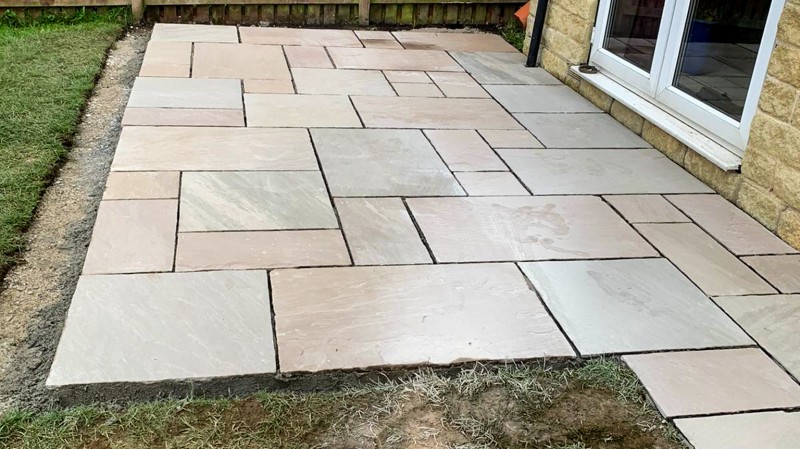
Seamless indoor-outdoor flow
One of the most effective ways to make your garden feel like part of your home is to blend the indoor and outdoor flooring. Using the same or similar tiles inside and out helps blur the boundary, making both spaces feel bigger and more connected. Porcelain tiles are ideal for this. They're durable, weather-resistant and available in styles that suit everything from modern minimalist spaces to rustic country homes.
Just remember that outdoor tiles need to be thicker (usually around 20mm), slip-resistant for safety and frost-proof. You’ll find outdoor porcelain tiles range from warm limestone to cool concrete effect and wood-look planks to match indoor flooring. Colours vary from crip white and ivory through to dark charcoal tones. Look for tiles specifically designed for both environments, making it easier to achieve a consistent look.
Choosing your paving pattern
The size and layout of paving slabs can change the entire feel of your patio. Square single sized slabs, such as 600mm x 600mm, are easy to work with, especially for DIY projects as their relatively small size makes them lighter to handle. Laid in patterns like a grid (stack) or brick bond, they create a clean, contemporary look.
However, a patio paved entirely with the same size slab can sometimes feel a little flat and boring. Mixing slab sizes introduces variation, depth and visual interest. Mixed size paving packs (often referred to as contractor packs) usually have between three to five different size slabs in the pack.
Paving packs, sold in pre-mixed sizes, make it possible to achieve a more interesting layout without the hassle of working out dimensions. They also reduce waste and are available in everything from sleek modern porcelain to natural stone and concrete. As Paving Direct points out: “Mixed size paving is often seen where a more traditional aesthetic is sought.”
Large slabs can reduce the number of units needed to cover an area and grouting, but they’re harder to lay in different patterns. Smaller block paving allows for classic styles, such as the herringbone.
Add natural beauty with stone
Few materials match the timeless appeal of natural stone. Indian sandstone is a favourite for its rich earthy tones, texture and natural variations. Even if you opt for a single size slab in sandstone, no two patios will look alike (unlike plain concrete).
Limestone offers a sleeker surface. Smooth underfoot and subtle in colour, it’s ideal for a more contemporary feel. However, Chris Moorhouse of Wickes, warns: “If it’s not sealed properly, any smoke or liquid can penetrate the stone and cause permanent staining.”
Natural stone can also create the seamless indoor-outdoor effect, particularly smooth limestone which can flow from kitchen or living area to an outside terrace. Remember to make your patio level with your indoor flooring, if possible, to create a better flow.
Define zones with pattern and shape.
Paving isn’t just about covering the ground; it can also help to organise your garden into distinct areas. For example, to carve out clear zones for lounging, dining or cooking in your outdoor space. Creating a distinct shape, for example circular, within your patio can form a natural focal point, perfect for a fire pit or garden table.
Some designers create “tile rugs” by framing a patterned section of contrasting tile, for example a diamond grid, within a plain paving area. This works beautifully under a dining table or in a lounge zone, acting like an outdoor version of a carpet.
Platforms - tiled or timber - raised slightly above the rest of the patio can set a dining area apart while pergolas introduce shade and a sense of architectural framing.
Make a statement with patterned tiles
Patterned tiles bring personality to a paved area. “We have come a long way from the days when patio spaces simply featured square sandstone or grey coloured slabs,” says Sian O’Neill from Topps Tiles. For period properties, Victorian or Edwardian designs can work well. Brompton Porcelain Clarence tiles from Ca’ Pietra, for example, can be used to bring the Victorian look into your garden as they are suitable for both internal and external use.
Bold patterned tiles work especially well for creating a defined dining zone or rug-like effect under outdoor furniture. For instance, Noho Dove Grey décor porcelain paving slabs, from Stone Superstore, provide a modern graphic pattern that works well when used with complementary plain tiles in the same range. If you’re looking for a splash of vibrancy, Moroccan, Mediterranean and Caribbean inspired tiles add colour and life.
Boost functionality with built-in features
Incorporating raised beds or built-in seating into your paved areas adds function while reducing clutter, such as pot plants or garden chairs. Using the same tile or stone across these elements ties the space together and gives it a designer finish if done well.
Built-in seating areas on a patio whether around a fire pit or along a wall on a patio, create cosy gathering areas. Matching the paving across vertical and horizontal surfaces creates a streamlined, high-end look. If you don’t want a raised bed, simply leave space for planting in the paving, creating neat rectangular or square beds that break up the surface with greenery.
Make the patio a cooking destination
For keen cooks, the patio can become an outdoor kitchen. This could be something as simple as a barbecue and prep space or as elaborate as a fully equipped set-up with a grill, pizza oven, bar, outdoor sink and refrigerator. Durable, weather resistant materials are essential. Integrating a dining area nearby will help make the patio feel like a sociable space for family meals and entertaining.
The Complete Outdoor Kitchen by Firepits UK is a standout example, offering a dome oven, a fire bowl, warming oven, spacious work surface and built-in log store along with a removable BBQ rack. According to the manufacturer, it’s possible to barbecue, saute and slow cook – all at once.
If you prefer a luxury look, add a granite worktop like Portmanstone Culliford’s Orinoco granite with its rich browns, greys and subtle gold veining.
Designing for accessibility
Designing your patio with accessibility in mind ensures it remains user-friendly for everyone. Wide and ideally level paths make movement easier for all ages from babies in buggies to the elderly using wheelchairs or walking aids. Aim for wide, clear paths (around 1.2–1.5m) and use firm, stable surfaces like paving slabs rather than gravel.
Lighting that works with the design
Incorporating lighting into your paving design boosts safety and creates an inviting atmosphere. Avoid floodlighting your patio. It wastes energy and creates light pollution. Strategically placed spotlights can highlight paths while LED strip lights along steps create a warm glow. Solar-powered options reduce energy use and avoid the need for complex wiring. By positioning lights carefully, you can highlight key features and create a welcoming mood, especially for entertaining after dark.
Outdoor paving alternatives
If paving slabs aren’t right for your project, there are alternatives. Gravel is budget-friendly and easy to lay yourself. Clay bricks offer a traditional, textured look. Decking gives character and warmth. Resin-bound surfaces deliver a smooth, modern finish and are usually permeable, but they need professional installation.
With smart planning, the right materials, and a thoughtful layout, your patio can become a standout feature - one that looks great, functions beautifully and adds value to your home.
If you are looking to make some home improvements, you may find some of these services useful

Building Regulations
Find details of local experts who can help with Building Regulations

Builders
Find local help with a building project
Architectural Design Services
Find local Architectural Design experts
Structural Inspections
Find an expert to carry out a structural inspection

Building Surveys
I want a local surveyor to do a Building Survey for me
Choose which Architectural service you require
If you are not sure which service you require, check out the options available...