You are here: Guide to lime plastering
Lime works well with buildings both old and new
Lime has helped to shape some of the world’s most iconic structures from the pyramids of Egypt to the Houses of Parliament in London. In Britain, its use dates to Roman times and for centuries it was the go-to material for plastering walls. Most homes built before 1920 would have had lime wall finishes as standard.
Unlike modern cement-based plaster, traditional lime plaster is a natural, breathable and extremely long-lasting material. It is suitable for both the restoration of period properties and new builds and can be used on a range of surfaces, such as brick, block, stone and timber.
What is lime plaster?
Traditionally used to finish interior walls and ceilings before painting, lime plaster is made from a mixture of lime, sand and water. The lime, typically hydrated lime (or lime putty), acts as a binder, while sand provides body and texture. Goat hair or coir is sometimes added to the mix to improve strength and adhesion to the underlying wall surface. Lime plaster, or more precisely lime render, is also used for exterior walls.
The lime comes from limestone, chalk or shells, all naturally occurring calcium carbonate. The raw material is fired in a kiln to produce a quicklime (calcium oxide). Water is added to the quicklime in a process called slaking. The result is slaked lime, the binder used to make lime plaster.
Is Lime plaster eco-friendly?
Lime plaster is often promoted as a sustainable alternative to cement-based products. “Lime plaster is a carbon-neutral material, meaning that while it emits CO2 during production it reabsorbs an equivalent amount from the atmosphere as it cures,” explains Fullers Plastering, a company that champions eco-friendly materials in its projects. “Compared to cement-based alternatives, lime plaster requires lower energy to produce, making it a more sustainable choice.”
However, the science to back up these eco-friendly claims is often missing. Although lime requires less energy to produce than many other types of modern plaster and does absorb CO2 from the air as it cures, the manufacture is still energy intensive and produces emissions. Whether it can truly be considered sustainable depends on the production process. For example, using renewable power sources instead of fossil fuels, firing at lower temperatures and recycling waste materials.
Why use lime plaster?
Lime plaster has many benefits even though it has largely been replaced by modern gypsum and cement-based products.
- Breathability – lime plaster has a porous structure which allows moisture to move in and out of the walls. This ability helps prevent trapped damp and mould growth within the building fabric, a common problem when old properties are finished with modern impermeable plaster.
- Improved air quality - Lime plaster supports better indoor air quality. Its natural high alkalinity and porous structure allow it to neutralise certain acidic gases, such as formaldehyde - a common irritant released from synthetic paints, furniture and adhesives. However, the effect is limited and lime plaster is not a substitute for good ventilation.
- Natural fungicidal effect – Because lime is highly alkaline, most fungi and mould can’t survive on its surface. On top of that, its breathability keeps walls dry and less hospitable to spores. Mould and fungi thrive in damp, stagnant conditions. This natural fungicidal effect is especially helpful for asthma and allergy sufferers.
- Flexibility - Unlike rigid cement, lime plaster has a bit of “give.” This makes it less likely to crack as buildings settle or shift over time.
- Self-healing - Through a process called autogenous healing, tiny cracks in the lime plaster can reseal themselves as free lime in the material reacts with carbon dioxide and moisture, forming new calcium carbonate.
- Durability – As lime plaster carbonates over time, it hardens into a stone-like material, giving it strength and resilience. With proper care it can last for centuries.
- Natural material – traditional lime plaster is 100% natural - no additives, plasticisers or cement.
Is lime plaster expensive?
Lime plaster is more expensive than standard gypsum or cement plaster. This is for two reasons. Applying lime plaster is a lengthier, more involved process compared to standard plastering, so labour costs are higher. Plus, lime products tend to be more expensive than cement-based alternatives. As of September 2025, materials costs for lime plaster typically range between £70 and £140 per square metre. By comparison, the average cost for plastering a wall is around £24 per square metre, according to Checkatrade.
Is lime plastering difficult?
Like most building jobs, you will get a better result if a skilled professional applies lime plaster to your walls than attempting it yourself. Look for someone with experience of finishing period and historic homes in lime plaster.
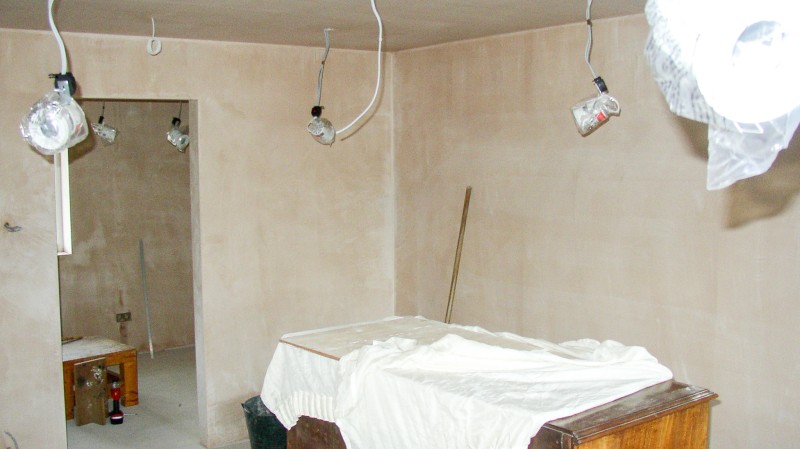
Lime plaster is usually applied in two main coats, sometimes three for a finer finish. First, a thin “scratch coat” is spread onto a clean, slightly damp wall and lightly scored to help the next layer stick. This layer takes at least 10 days to cure, possibly longer. Once it has dried, a second, smoother coat is applied and carefully spread to create an even surface. This takes a further 10 days-plus to set and an optional third coat may be added for extra smoothness, which takes about four days to dry. Each coat must dry before the next can be applied.
Modern updates to lime plaster
Pre-mixed products are now widely available, removing the need for on-site mixing and ensuring consistent results. In addition to traditional lime putty, hydraulic lime is often used; it sets faster and performs better in damp conditions, making it especially useful for external walls.
Innovative blends, such as lime-based insulating plasters, are marketed as a natural and sustainable way to insulate interior walls. Often made from a blend of hydraulic lime, clay and natural fibres, these plasters improve thermal performance while maintaining breathability. The result is a comfortable, healthy and energy efficient interior, say suppliers. Lime is also being used in decorative finishes like Venetian plaster, which creates a smooth, polished surface ideal for modern interiors.
What paint can I use on lime plaster?
There’s little point in using breathable, natural lime plaster if you cover it with a non-breathable acrylic paint. Always choose a paint suitable for use over lime plaster and wait for as long as your plasterer recommends before painting. Earthborn Paints, for example, suggest that every 5mm of lime should cure for a minimum of four weeks before being painted or limewashed.
Limewash is the traditional finish for lime plaster, adding colour and protection while remaining breathable. Its microporous, alkaline properties can also help deter algae growth and many conservation specialists recommend it. However, it must be applied in multiple layers and possibly reapplied every few years.
Alternatively, breathable paints or distemper offer a simpler finish without trapping moisture. Brands to look for include Farrow & Ball, Earthborn Paints, Little Greene and Edward Bulmer.
Lime plaster has many benefits. It is a natural, breathable and highly durable material. Lime plaster is no longer just for heritage properties but increasingly used in eco homes and sustainable renovations. For homeowners with a limited budget or tight time schedule, cement or gypsum plaster is often chosen as the more practical option, but for durability, flexibility and breathability, lime plaster is hard to beat.
If you are looking to make some home improvements, you may find some of these services useful

Building Regulations
Find details of local experts who can help with Building Regulations

Builders
Find local help with a building project

Architectural Design Services
Find local Architectural Design experts

Structural Inspections
Find an expert to carry out a structural inspection

Building Surveys
I want a local surveyor to do a Building Survey for me

Choose which Architectural service you require
If you are not sure which service you require, check out the options available...