You are here: What is a Certificate of Lawfulness?
A Certificate of Lawfulness is a document issued by a local authority planning department. Many people are unaware of their existence or of their potential importance in avoiding a possible barrier to a future sale of the property in question, or averting a possible prosecution and attendant fine.
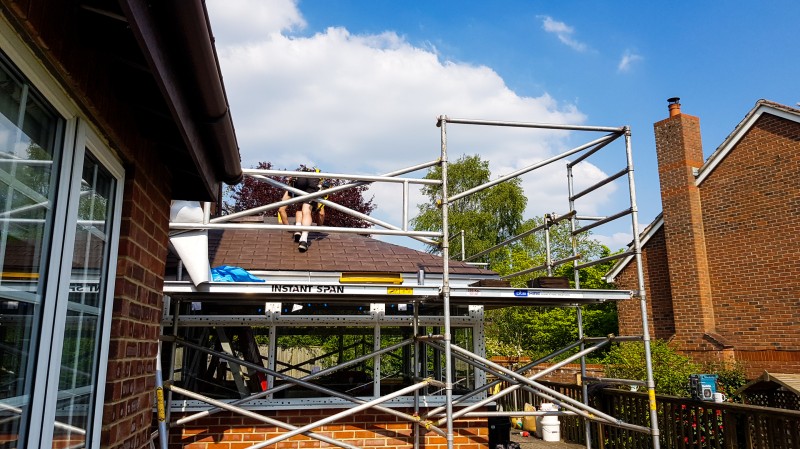
When relating to historic works carried out to a property, Certificates of Lawfulness have become more important since the introduction in 2015 of Permitted Development Rights which allow householders to improve or extend their homes without the need to apply for planning permission. By deciding to use your permitted development rights and starting construction without a Certificate of Lawfulness, you cannot guarantee that your building works are legal.
This could potentially put your development at risk as building works which breach the permitted guidelines or do not comply with statutory building regulations will be deemed as unacceptable by the local authority and may need to be amended or reversed at the property owner’s expense. At this stage it is also worth noting that you should not assume you have Permitted Development Rights. Your property may already have been extended to the maximum allowed under this scheme. To find the limits imposed on works carried out under Permitted Development Rights please contact your local authority or search on The Planning Portal under https://www.planningportal.co.uk/permission/responsibilities/planning-pe.... It may also be that the local authority has withdrawn these at some stage in the past, so always check.
Many future buyers will be wary of purchasing an extended property if there's no proof the build was legal or the correct planning procedure was followed. In such a case, either retrospective planning permission or a Certificate of Lawfulness may be sought.
To obtain a Certificate of Lawfulness to cover existing works relating to a residential property you would be required to prove that the development was legal at the time the works were carried out. To do that you would be required to present the relevant documentation to support your request to the local council. They would want to see the changes that have been made and ensure that they are all within the restrictions prevailing at that time or that the changes made to a residential property were mostly completed at least four years prior to the application. This ensures that no planning enforcement action is taken by the local planning authority.
A Certificate of Lawfulness can also be used to show a prospective purchaser that no enforcement action can be taken by the local planning authority. Most residential building works will be immune from enforcement action four years after completion of the works, whilst other properties may be exempt after ten years.
Documentary evidence certifying that minor works undertaken in a residential property such as electrical wiring, plumbing or home improvements have been carried out in compliance with current building regulations are also important. In most cases a certificate on compliance can be issued by the tradesman or company carrying out the work. This is referred to as self-certification. For other works where the tradesman is not qualified to self-certify, a building control inspector, either from your local council or a private individual such as a local architect who can inspect and certify the work.
Permitted Development Rights do not give a carte blanche to build or alter a structure which would otherwise breach planning or building regulations. When preparing to build an extension to a property or alter it in any way, Permitted Development Rights give the developer an opportunity to tell the local authority “This is what I intend to build”. You are not asking for permission. It does mean that the local planning department can highlight any areas where your plans are not compliant and gives you the opportunity to amend areas of non-compliance. They cannot refuse you permission, that has already been granted by the Secretary of State under Permitted Development Rights. The planners can only ask you to amend any aspect of the proposed works that are in contravention of the permitted rights. At this stage you can ask the authority to issue you with a Certificate of Lawfulness which will state that the work you have proposed meets the required planning and building regulations.
A Certificate of Lawfulness issued by your local authority, relating to work to be carried out to a residential property should take about eight weeks to process if there are no issues to be resolved, with a cost of around fifty percent of that of a comparable planning application. A retrospective application could incur a cost similar to that of a full planning application.
With an application for planning permission, you are applying to your local authority planning department for permission to carry out building work and they must in turn advise your neighbours of your intent to give then the opportunity to object should thy so wish. This process may end in a refusal. By utilising your Permitted Development Rights and ensuring that you comply with all the terms and provisos that entails, you already have permission granted by the Secretary of State. On that basis, your neighbours have no recourse or no right of objection and your local council cannot refuse your development. By applying for a Certificate of Lawfulness, you are telling the council that you have permission and asking them to certify that your proposed build is legal.
Planning issues can be very emotive, most people are resistant to change of any kind, particularly if they will be faced by that change on a day to day basis. Planning Permission, Permitted Development Rights and Certificates of Lawfulness have been put in place to protect everyone and the environment we all live in. Getting the process wrong can be expensive and time consuming which is why it is always better to engage a professional if you are in any doubt as to how to best proceed.
If you are looking to make some home improvements, you may find some of these services useful

Building Regulations
Find details of local experts who can help with Building Regulations

Builders
Find local help with a building project

Architectural Design Services
Find local Architectural Design experts

Structural Inspections
Find an expert to carry out a structural inspection

Building Surveys
I want a local surveyor to do a Building Survey for me

Choose which Architectural service you require
If you are not sure which service you require, check out the options available...